

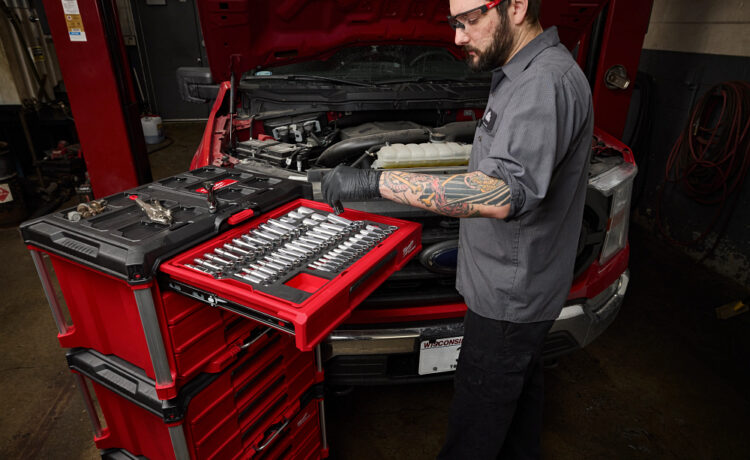
If you spend enough time around tools, probably accompanied by dust, the noise, and the “let’s just get this done” chaos—you start noticing something: the old ways of storing your tools of trade aren’t holding up anymore. The slap-together storage setups, the reinvent-the-wheel every morning routine, the “good enough” boxes we all grew up with, they’re collapsing under today’s pressure for speed, quality, and accountability.
And the people who feel it first aren’t executives—they’re the tradespeople on the ground. That’s why more builders, service operators, and even investors are finally waking up to something obvious: mobile tool systems are no longer accessories. They’re infrastructure. And the companies treating them that way are the ones seeing fewer breakdowns, sharper workflows, and crews that actually breathe between tasks.
1. Rugged Protection for Job Sites That Don’t Care About Your Budget
Most field job sites are hostile. Concrete dust in the air, mud swallowing your boots, rain that laughs at your schedule. However, with modern innovations like Red Box Tools solutions, none of these slows you down; these storage solutions treat your tools as capital assets.
Such professional designs counter collision impact and environmental effects on your tools. Pretending otherwise is how businesses bleed money without realizing it. That’s why rugged mobile systems matter. Not because the marketing says so, but because physical protection and security features of your tools are essential. Premium, modern mobile tool storage systems offer:
- Impact-rated shells take the hits your crews can’t avoid—drops, vibration, sudden shifts in a truck bed.
- IP65 sealing keeps slurry, dust, and weather from quietly murdering your tools from the inside out.
- Heavy-duty lockable latches stop your gear from spilling across a sidewalk or “disappearing” when backs are turned.
This gear is ideal for people deal with sensitive tools and those who work in environments that eat anything that isn’t built with intention.
2. Mobility That Moves the Work; Not Just the Tools
Walk any site and you’ll see the same sight: someone hauling three mismatched boxes, a bucket full of parts, a drill swinging from their elbow, and a face that says, “I should’ve just been a fisherman.”
The industry’s dirty secret? Technicians lose a lot of time searching, and unstacking/re-stacking tools. However, modern mobile systems flip that script. They’re designed so crews can roll out everything in one shot, keep their gear layered in the order they actually work, and move from task to task without rebuilding their setup every hour.
This shows up in real, gritty ways:
- Modular stacks that lock into a single, rolling workflow instead of a juggling act.
- All-terrain wheels and extendable handles built for gravel, ruts, stairs, and unfinished everything.
- Load-rated frames that don’t warp when a crew actually uses them the way a crew uses things.
The benefits go beyond convenience; such strategy helps keep technicians and engineers sharp instead of being drained before the day even starts.
3. Precision Layouts That Eliminate the Hidden Tax of Chaos
Every professional has lived that moment: digging for one fitting, one bit, one tester, while the clock ticks and the workflow stutters. Modern systems counter that with specialized foam inserts, etched silhouettes, custom dividers, and clear-lid organizers—structures tailored to how each trade actually works.
Modern systems attack that chaos head-on with:
- Foam inserts and etched cutouts that make missing tools scream at you instead of hiding.
- Removable bins and modular dividers so each trade builds the layout that fits their style of work—not a generic blueprint.
- Clear-top organizers that show you exactly what’s there without digging like you’re searching for treasure.
This is not traditional definition of being organized; it is professional rhythm management, and it pays for itself long before the job closes out.
4. Power and Smart Tracking That Turn Boxes Into Workstations
Here’s where things get radical: a specialized toolbox isn’t a box anymore. It’s a power station, an information hub, a digital safety net—something old systems never even attempted to be.
You see the shift in three places:
- Integrated charging bays that keep batteries alive without a tangle of cords on a wet floor.
- Wireless tracking that stops the “where’d that tool go?” spiral and protects high-value assets across fleets.
- On-stack USB power that lets crews access plans, diagnostics, and communication without hunting for an outlet—because job sites rarely offer hospitality.
These systems evolve storage into a mobile infrastructure that grows with the demands of modern cordless job sites.
In essence, for technicians whose trade revolves around tools, choosing the right storage box is about optimizing on the resources they can’t afford to waste: time, reputation, and money. Leveraging the design of reliable modular tool storage systems that incorporate precision foam inserts helps lock together crucial features into a cohesive unit.
This alignment solves the problems of traditional, disparate toolboxes and bags. Because at the end of the day, progress in the trades doesn’t come from working harder—it comes from building environments that let skill, timing, and craftsmanship do what they’re meant to do: carry the work forward with precision and pride.